Panchakarma Therapy
Health is not simply the absence of disease. It is a way of living in harmony with nature.
Ayurveda describes this approach as Swasthavritta-a way of life that supports health by living in tune with the rhythms of nature and following a Dharmic way of life, based on righteousness and wholesome living.
In the present time, maintaining health has become increasingly challenging. Environmental pollution, pesticides and fertilisers, exposure to chemicals through perfumes, cosmetics and the food industry, along with chemical drugs, add to the burden on the body. Changing lifestyles and increasing stress further contribute to lifestyle disorders and the accumulation of toxins, known in Ayurveda as Ama. The increasing prevalence of various types of cancer, degenerative neurological problems, motor neurone diseases, failure of vital organs such as the kidneys and liver, and autoimmune diseases further reflects the growing health challenges of our time.
The Ayurvedic Understanding of Cleansing
According to Ayurveda, the human body is continuously undergoing transformation. Cells are constantly being formed and destroyed, while metabolic processes transform food into the seven fundamental tissues, known as Dhatus.
These processes also produce waste materials and accumulated impurities. Ayurveda therefore considers periodic cleansing and elimination important for maintaining health.
This understanding forms the basis for the development of Panchakarma—five classical purification procedures selected according to the individual's constitution, condition, and therapeutic requirements.
Panchakarma is performed under the supervision of an experienced Ayurvedic physician (Vaidya).
Preparing the Body
Before Panchakarma, accumulated Doshas and impurities situated in deeper levels of the tissues are traditionally prepared for elimination.
Snehapanam, the internal administration of appropriately prescribed medicated ghee or oil for a specific number of days, is used as part of this preparation. It is followed by Swedana, or therapeutic sudation, and then by the appropriate Panchakarma procedure.
Kerala's traditional therapies also play an important role in this preparatory process.
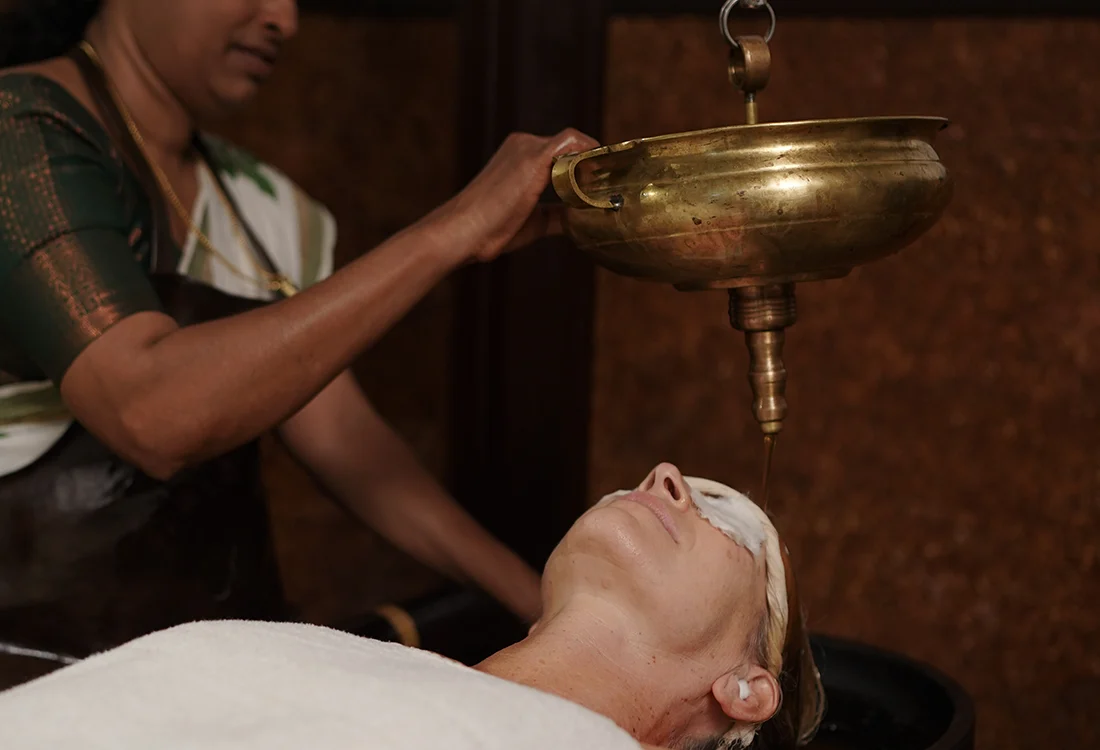
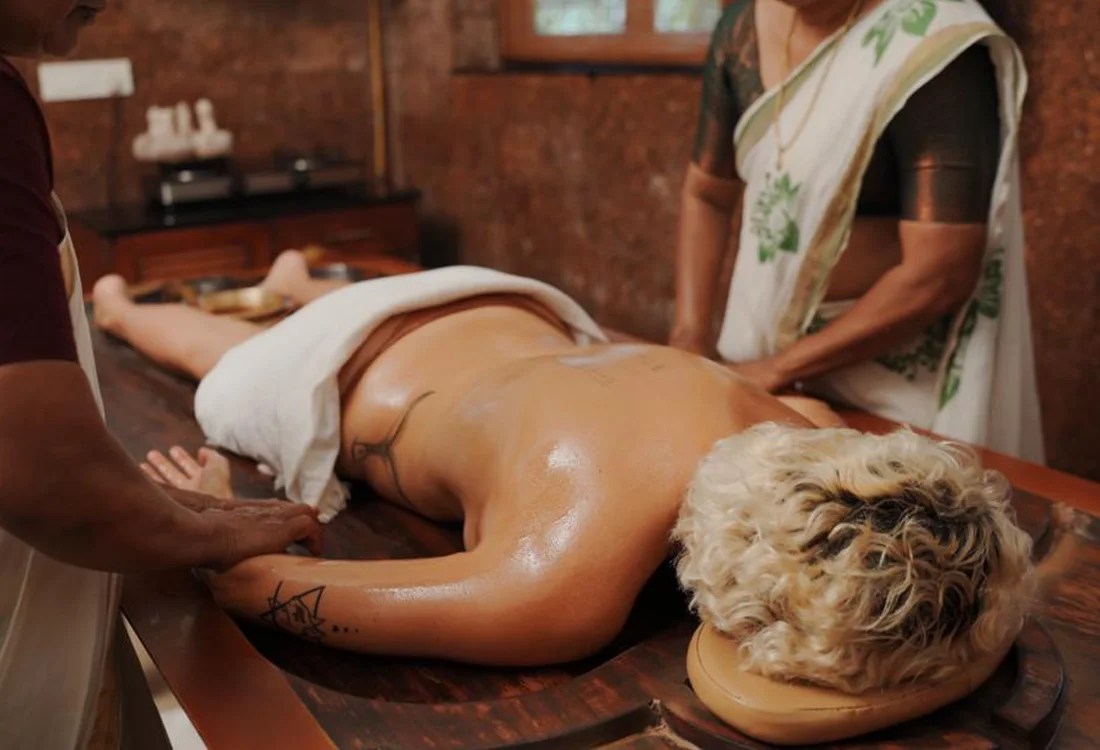
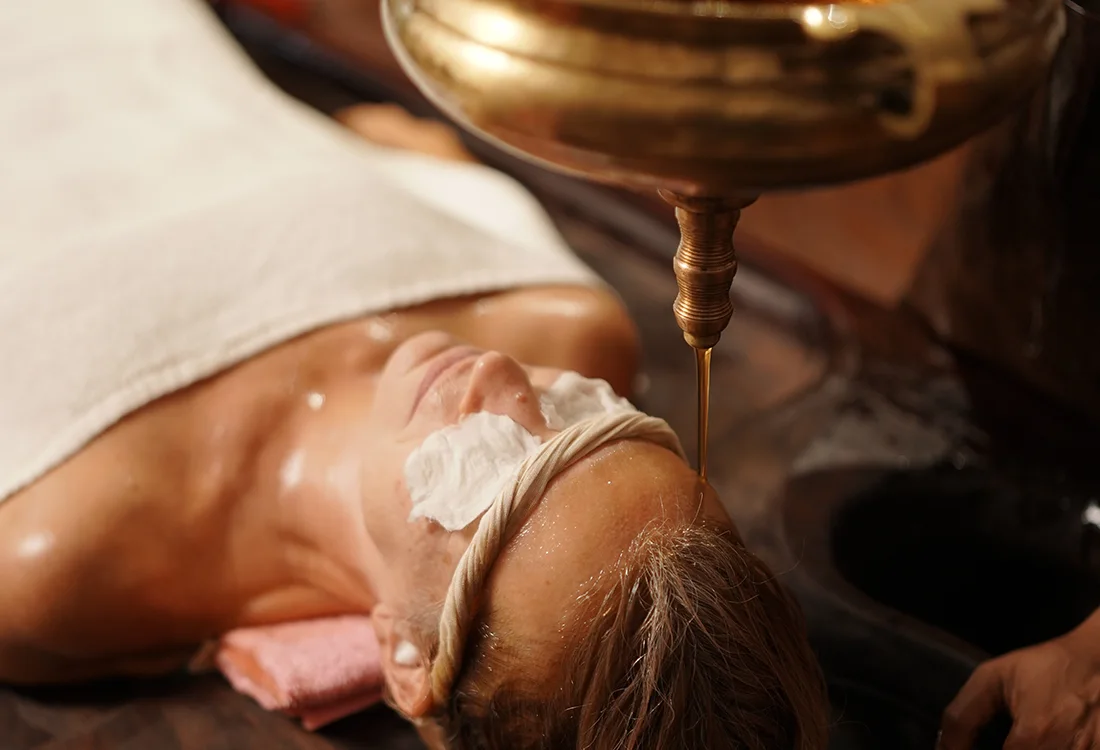
Treatments such as Podikkizhi, Elakkizhi, Pizhichil, Dhanyamladhara, Navarakkizhi, and Sirodhara may be prescribed according to the individual's condition.
These therapies combine the principles of Snehana (oleation) and Swedana (sudation) and are traditionally performed over a prescribed period, allowing their effects to progress gradually through the seven Dhatus.
The Five Panchakarma Therapies
01. Vamanam
Therapeutic Emesis
Vamanam is the therapeutic induction of emesis and is traditionally associated with the management of vitiated Kapha-related disorders.
Kapha represents the constructive and sustaining aspect of the body. Through the upward movement of Prana, Vamanam is traditionally used to eliminate accumulated Doshas and impurities from the upper regions of the body, including areas associated with the head, neck, stomach, and lungs.
It may also be considered in certain conditions involving excessive or hyper-constructive processes elsewhere in the body.
Vamanam is performed only after appropriate preparation and under the supervision of the Ayurvedic physician.
02. Virechanam
Therapeutic Purgation
Virechanam is a medically induced therapeutic purgation and is particularly associated with the management of aggravated Pitta.
Pitta represents the principle of transformation and is responsible for metabolic activities within the body. Virechanam is traditionally used to support the proper functioning of these processes and to address imbalances associated with organs and systems such as the liver, spleen, pancreas, and digestive system.
It is also used to cleanse accumulated waste from the intestinal tract, improve digestion and absorption, and support regular elimination.
Ayurveda gives great importance to the health of the gut, recognising its relationship with the overall health of the individual.
An interesting indication mentioned in the classical texts is “Beejam Bhavathy Karmukham,” referring to the role of Virechanam in supporting the motility and function of sperm.
Virechanam may also be considered in selected neurological conditions and other conditions according to the individual's Ayurvedic assessment.
03. Vasthi
Medicated Enema Therapy
Vasthi involves the administration of prescribed herbal decoctions, medicated oils, or combinations of medicines through the rectal or genital route, according to the individual's condition.
Vasthi is particularly associated with Vata, the Dosha governing movement and the body's vital energies. The primary site of Vata is considered to be the gut.
Vata may become aggravated through degeneration or obstruction in the pathways of Prana and other vital energies. Through carefully selected medicinal formulations, Vasthi is traditionally used to address Vata disorders and may also be incorporated into the management of conditions involving Kapha and Pitta.
Ayurveda places particular importance on the gut in relation to neurological health. Vasthi is therefore traditionally used in various neurological and degenerative conditions.
In severe degenerative conditions, medicated oil may be administered alone with the intention of nourishing and supporting the system.
Vasthi also has an important role in Ayurvedic approaches to back problems, fertility concerns, and menstrual disorders.
04. Nasyam
Ayurvedic Nasal Therapy
Nasyam involves the administration of specially prepared Ayurvedic medicines through the nasal passages.
In Ayurveda, the nose is regarded as an important pathway for Prana and for therapeutic intervention in the head, neck, and related structures.
For a healthy person, a small daily dose may traditionally be prescribed. During therapeutic Nasyam, the dosage may be gradually increased according to the individual's condition and the physician's advice.
Nasyam is traditionally used to clear accumulated mucus from the nasal passages and sinuses and to support the proper functioning of the structures associated with the head and neck.
Nasyam may also be used in conditions such as facial paralysis (facial palsy) and difficulty in lifting the upper limb (Apabahukam), according to the individual's condition and the physician's assessment.
The treatment may be combined with facial oil massage and therapeutic steam inhalation as part of the prescribed procedure.
05. Rakthamoksham
Therapeutic Bloodletting
Rakthamoksham is a classical Ayurvedic procedure involving the controlled removal of blood according to the individual's condition and therapeutic requirements.
Different traditional methods may be used to remove what Ayurveda describes as impure or vitiated blood and to support proper circulation.
These methods include Jalaukavacharana (leech therapy), Prachannam, Shrungam, and Siravedam.
Prachannam involves controlled pricking of the affected area of the skin. Shrungam uses a horn or appropriate instrument to draw blood through suction. Siravedam involves controlled venesection of a vein.
Leech therapy (Jalaukavacharana) is a traditional method that is now also recognised and practised in various parts of the world.
Rakthamoksham is performed only when considered appropriate and under qualified professional supervision.
The Essence of Ayurveda
Ayurvedic herbs are prepared and administered in different forms according to the individual's needs, with the intention of supporting better absorption and restoring balance within the body's systems.
Ayurveda seeks to bring the purity and serenity of nature into the body and to reconnect us with the natural forces-both seen and unseen-that exist beyond the boundaries of the body and mind.
This connection with nature is at the heart of the Ayurvedic understanding of health, happiness, peace, and blissful living.
Yet, according to Ayurveda, physical purification alone cannot bring lasting purity. As long as the Karma and mind remain impure, true well-being remains incomplete.
For this reason, Ayurveda also encourages us to understand our spiritual reality and to perform our Karma in the light of Dharma.
Paschat Karma
Supporting Recovery After Panchakarma
Paschat Karma refers to the post-procedural phase of Panchakarma. This stage is an important part of the overall treatment process and focuses on helping the body gradually return to its normal routine.
It may include Samsarjana Krama, a carefully graduated dietary regimen traditionally used to gradually restore digestive capacity following intensive procedures.
Appropriate dietary guidance, daily routines, rest, and lifestyle recommendations may also be provided to support recovery and help maintain the benefits of the Panchakarma program.
A Personalized Ayurvedic Journey
At Ayurvedam @ Ayurmali, Panchakarma is approached as an individualized therapeutic journey rather than a standardized package. Each person's treatment plan is developed according to their constitution, health status, therapeutic needs, and response to treatment.
From preparation and the principal therapies to post-treatment care, every stage is guided by classical Ayurvedic principles and delivered with careful attention to safety, comfort, and individual needs.
Your Panchakarma program begins with understanding you.
Contact Us
Get in touch with Ayurvedam at Sreenilayam for more information about our Ayurvedic treatments.